THE PACKAGING JOURNAL
What Is Cardstock? Weight, Thickness & Packaging Uses
Understand cardstock grades, basis weight, GSM and caliper, then choose a printable material around the finished carton and its intended use.
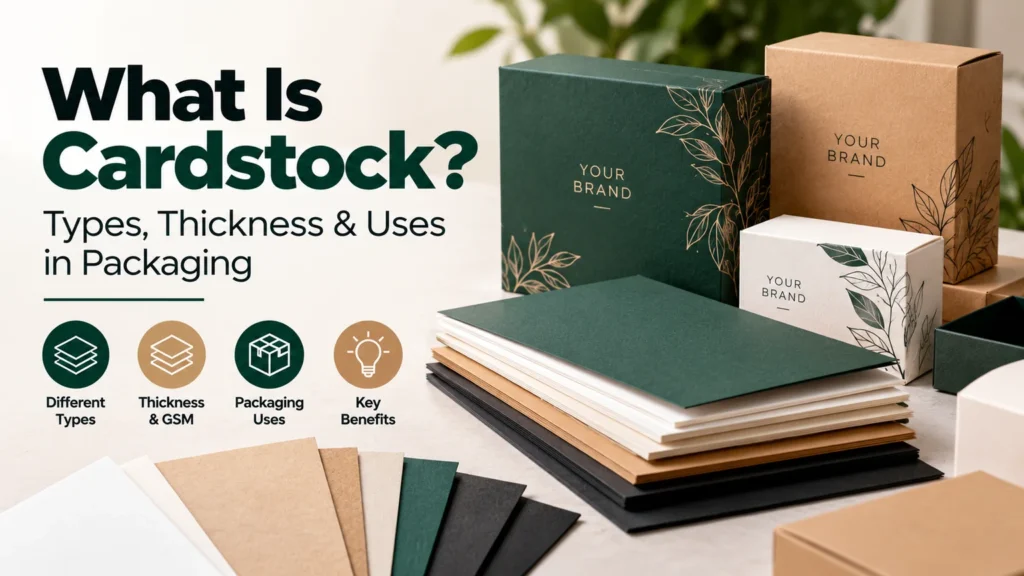
Cardstock is a heavier, stiffer paper used when ordinary printing paper lacks the body a job needs. It can be printed, cut and folded into cards, sleeves and lightweight product cartons. “Card stock” is another spelling, not a different material.
The name does not specify one thickness or grade. A stock that makes a good backing card may behave differently when folded into a box. For packaging, check the material specification and finished structure together, especially when comparing weight numbers from different suppliers.
What Is Cardstock Paper?
Cardstock paper is a broad class of substantial printable sheets. It generally feels more rigid than everyday text or copy paper, while suitable grades can still be creased and folded. There is no single weight at which every supplier starts using the term.
Packaging discussions may also mention cover stock, paperboard or SBS. These terms overlap in use but are not exact substitutes. SBS means solid bleached sulfate, a specific paperboard category. It does not describe every sheet sold as cardstock. Our cardstock and SBS board overview connects those material choices with folding-carton projects.
Cardstock vs Regular Paper vs Cardboard
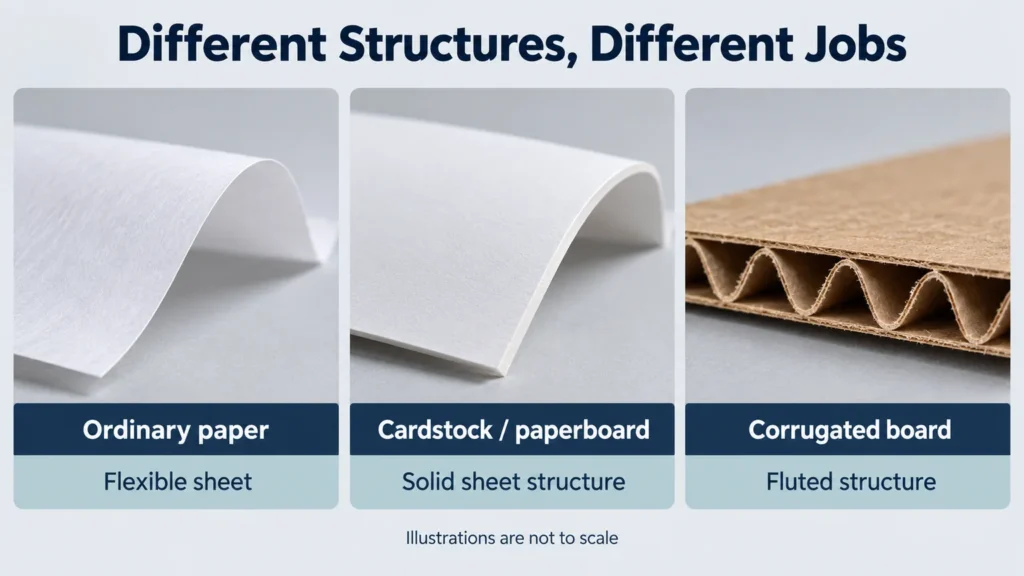
“Cardboard” is an everyday umbrella term. It can describe solid boards as well as corrugated packaging, so ask which structure someone means. Corrugated board has a fluted layer; ordinary cardstock does not.
| Consideration | Regular paper | Cardstock / paperboard | Corrugated board |
|---|---|---|---|
| Structure | Thin printable sheet. | Substantial solid sheet; construction varies. | Fluting between flat liners. |
| Stiffness | Usually flexible. | More body; grade and caliper matter. | Depends on complete board construction. |
| Print role | Documents and leaflets. | Cards, cartons and retail graphics. | Shipping and printed outer packs. |
| Folding | Often folds readily. | Cartons need planned creases. | Requires structure-specific scoring. |
| Shipping | Not a protective enclosure alone. | May need an outer shipper. | Must still suit the packed product. |
How Weight and Thickness Are Measured
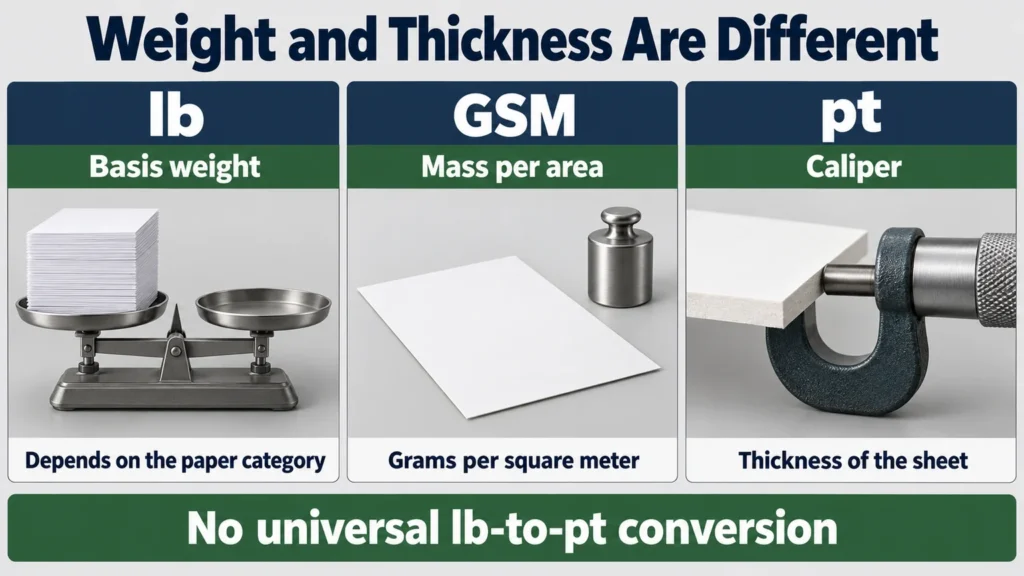
Weight and thickness answer different questions. A purchase brief is clearer when it names the stock grade and measurement system rather than requesting “thick card.”
lb, or basis weight, expresses the weight of a standard quantity of sheets at the basic sheet size for that paper category. Domtar’s paper glossary defines the standard ream as 500 sheets and explains that basic size varies by grade. A pound number without its category leaves part of the specification missing.
GSM means grams per square meter: mass for a fixed area. It lets buyers compare grammage without changing the reference sheet size. It does not directly measure thickness; papers with different density or construction can have similar GSM and different calipers.
Caliper is the thickness of a sheet, commonly expressed in points, inches or metric units. lb and pt are therefore not interchangeable. Ask for the supplier’s exact grade, basis-weight category or GSM, and caliper where the structure requires it.
What Does 65 lb, 100 lb or 110 lb Mean?
These are examples of pound-based paper descriptions. Confirm whether the specification means cover, index or another category before comparing them. A larger number is not enough to rank unrelated stocks.
For example, “100 lb cardstock” does not establish a universal thickness. Within a defined product range, the manufacturer’s data can connect basis weight, GSM and caliper. That relationship should not be copied to a different grade as a fixed conversion.
What Does 10 pt Cover Stock Mean?
In the common paper-caliper convention, one point is 0.001 inch, so 10 pt describes a nominal thickness of 0.010 inch. Case Paper explains this point-caliper convention. It is not the typographic point used for font size, and it does not tell you the stock’s pound basis weight.
Common Types of Cardstock
Coated or smooth white stock provides a surface chosen for printed graphics. Coating can be applied to one or both sides; confirm which faces will carry artwork. Uncoated stock offers a different surface feel and ink response, so the same artwork may need a different approach.
SBS and other folding-carton paperboards are specified for the intended carton and print process. They should be evaluated by their actual grade, not just a generic cardstock label.
Kraft, recycled-content and textured stocks offer other visual and surface choices. A brown or flecked appearance does not prove recycled content or environmental performance. Confirm composition and any claims from the actual specification. Specialty textures also need a print and finish check.
What Is Cover Stock?
Cover stock is heavyweight paper associated with covers and other substantial printed pieces. It is often called cardstock in everyday use. In a technical quotation, however, “cover” can identify the category behind a basis-weight number. Keep that category in the written specification instead of shortening everything to “card.”
Cardstock Sizes: Sheets vs Finished Packaging
Cardstock paper sizes describe sheets supplied for production or printing. They are different from the dimensions of a finished card, sleeve or carton. Neither tells you the material thickness.
For custom packaging, the dieline includes the panels, folds, flaps and glue areas needed to form the box. The production sheet must accommodate that layout. Start with the product and required internal fit rather than selecting a familiar sheet size and treating it as the box size.
How Cardstock Is Used in Packaging
Suitable grades can form folding cartons, product sleeves, backing cards, tags and some inserts. These applications use the material’s printable surface and ability to hold a cut-and-creased shape. Sleeve packaging, for example, needs attention to the sliding fit as well as the printed panels.
Small retail products, including those considered for cosmetic boxes, also need support, closure and loading clearance. A carton is not automatically a parcel shipper. Heavier contents or delivery handling may require an outer corrugated box, inserts or a different structure.
Printing and Finishing on Cardstock
Review the surface before choosing the finish. Lamination, foil stamping, spot UV and embossing or debossing need compatibility with the exact stock, coating, artwork and production method. A finish that works on one sample is not automatically suitable for every grade.
Creases deserve the same attention as the printed face. Check folds and edges on a physical sample, particularly where artwork crosses a crease. Our broader packaging materials and finishes guide helps frame those combined decisions.
How to Choose Cardstock for Custom Packaging
- Define the contents: dimensions, packed weight, accessories and surfaces needing protection.
- Confirm the structure: box style, closure, folds, creases and insert requirements.
- Specify the material: grade, GSM or named basis-weight category, required caliper and surface.
- Review production: artwork coverage, finishes, loading, removal and shipping environment.
- Check a sample: assess the actual packed fit, print proof and crease behavior before approval.
Frequently Asked Questions
Is cardstock thicker than regular paper?
It generally has more body than everyday copy paper, but the name alone does not set an exact thickness. Compare the specified grade and caliper.
How thick is cardstock?
There is no single thickness. Ask for caliper in points, inches or metric units rather than inferring it from a pound-weight description.
What weight is cardstock?
The category spans different weights. Check the paper category for lb descriptions and use the manufacturer’s GSM and caliper data for that exact stock.
Is cover stock the same as cardstock?
The names overlap in everyday use. Keep “cover” in a technical basis-weight specification because it identifies a measurement category.
Is cardstock the same as cardboard?
Not precisely. Cardboard is a broad everyday name. Cardstock is normally a solid sheet; corrugated board has a distinct fluted structure.
Can cardstock be used for packaging?
Yes, suitable grades can form folding cartons, sleeves, cards and some inserts. The finished structure and delivery conditions determine whether additional protection is needed.
Choose the Specification, Then Check the Carton
Cardstock is a family of printable, substantial sheets rather than one fixed material. Grade, surface and caliper help explain how a stock will work; a weight number alone cannot settle the choice.
For a project discussion, request a packaging quote with product dimensions, quantity, artwork and intended use. Include any required thickness or finish, then confirm the complete carton with a sample before approving production.
KEEP EXPLORING