
THE PACKAGING JOURNAL
Custom Box Inserts: How to Choose the Right Fit
Compare custom box inserts, dividers and fitted trays. Learn what to measure and test for product restraint, easy removal and a clear packaging quote.
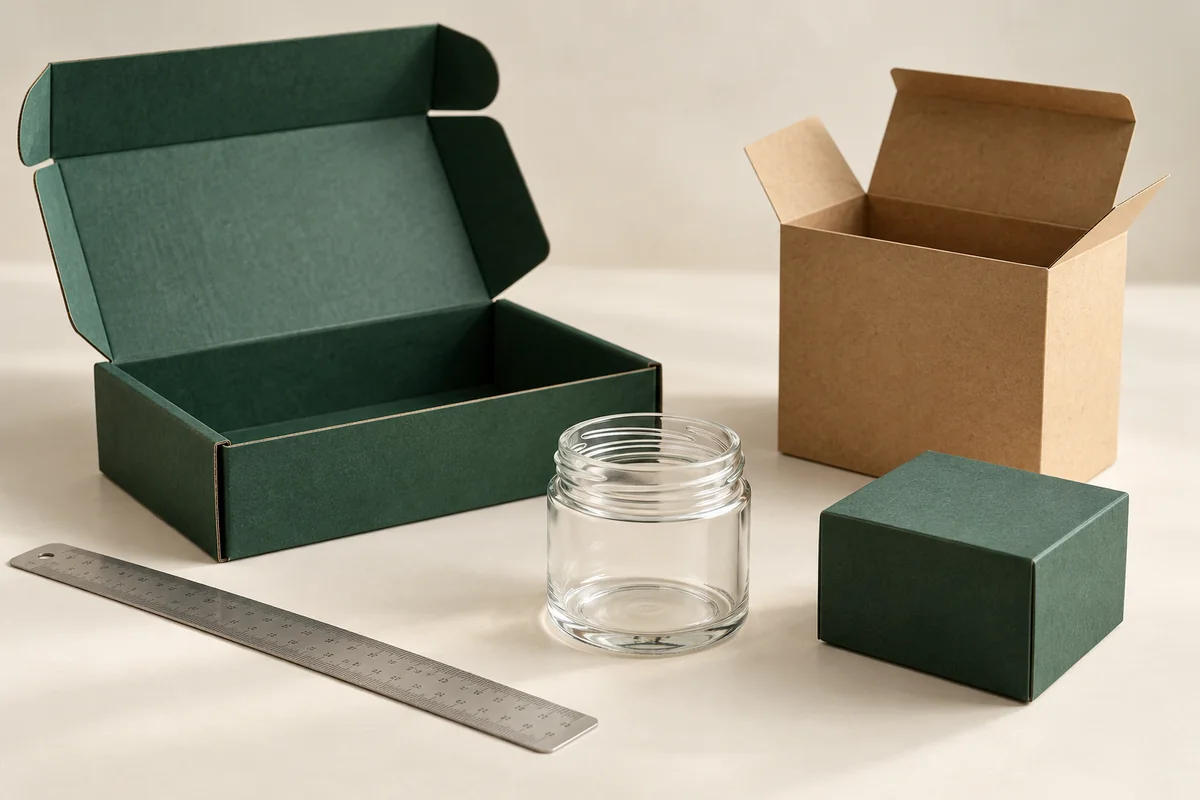
Custom box inserts organize products inside a package and can help limit unwanted movement. The right insert depends on the product, box structure and handling journey. A close-looking cutout is not enough: the item must load easily, stay in position and come out without frustration. Use this guide to compare options and prepare a practical sample brief.
What does the insert need to do?
Start with the problem. Are two jars touching each other? Does a bottle tip over during packing? Is a small accessory difficult to find? Some packs need separation, some need support and others need a clear presentation layout. Define those needs before selecting a material.
For a presentation-led pack, compare the insert with your rigid box construction. For delivery, evaluate it as part of the complete mailer box system. An insert is one component of protection; it does not make an unsuitable outer box shipment-ready.
Compare dividers, folded inserts and fitted trays
Dividers create separate cells and can be useful when several items need space between them. Folded board inserts use cut and creased panels to hold products in defined positions. A fitted tray can follow the product layout more closely. The most elaborate construction is not automatically the best choice.
Compare loading effort, removal, assembly and storage alongside appearance. A design that requires several loose parts may take longer to pack than a simpler folded insert. Ask the supplier which constructions are available for your quantity and whether a structural sample is needed to establish the fit.
Choose materials around the product and journey
Corrugated board can form partitions or folded supports. Kraft-based paperboard options can suit selected folded designs. Depending on the application, other options may include molded fiber or foam. Availability, composition and performance need confirmation for the specific project.
Do not judge protection by thickness alone. Board grade, cutout shape, folds, support points and the outer box all matter. A delicate surface may also need a compatible contact layer. Check any product-specific requirements with the relevant packaging specialist, particularly where direct contact or special handling is involved.
Measure the full product, then check removal
Record the complete dimensions, including lids, pumps, handles and accessories. Measure real samples rather than relying only on a nominal specification. Identify fragile projections and acceptable contact areas. If products vary between batches, tell the supplier before the cutout is finalized.
Distinguish the product size from the proposed insert opening and usable box space. There is no universal clearance suitable for every item. Allow for the material, assembly and agreed tolerances. Test finger access and confirm that the item can be removed without pulling on a vulnerable feature.
Test the complete packed system
Load the sample using the normal packing steps, close the box and check whether the insert moves independently. For sets, inspect how items interact when the package changes orientation. Review the proposed system for the handling conditions, including outer packaging, closure and any additional cushioning.
The USPS package-preparation guide emphasizes strong packaging and cushioning that helps prevent contents from shifting. Use the guidance for your chosen carrier and service, and ask about appropriate transit testing. A hand check alone does not establish protection throughout delivery.
What should go into an insert quotation brief?
Send product dimensions and weight, photographs or samples, the number of items per pack, the preferred arrangement and the intended box format. Include quantity, assembly preferences and delivery needs. Ask whether tooling, samples and any contact materials are included in the proposed scope.
Compare equivalent specifications when reviewing quotes. A lower insert price may involve more assembly or another protective component. Request a revised sample if the product or layout changes. Approve the full pack rather than treating the insert as an isolated accessory.
For a seasonal set, use our holiday gift packaging checklist. To discuss a specific product, send your packaging brief with the box and insert requirements together.