
THE PACKAGING JOURNAL
Custom Packaging Trends 2026: Practical Design Ideas
Explore practical custom packaging trends for 2026, with design trials for fit, brand clarity, SKU consistency and a useful unboxing experience.
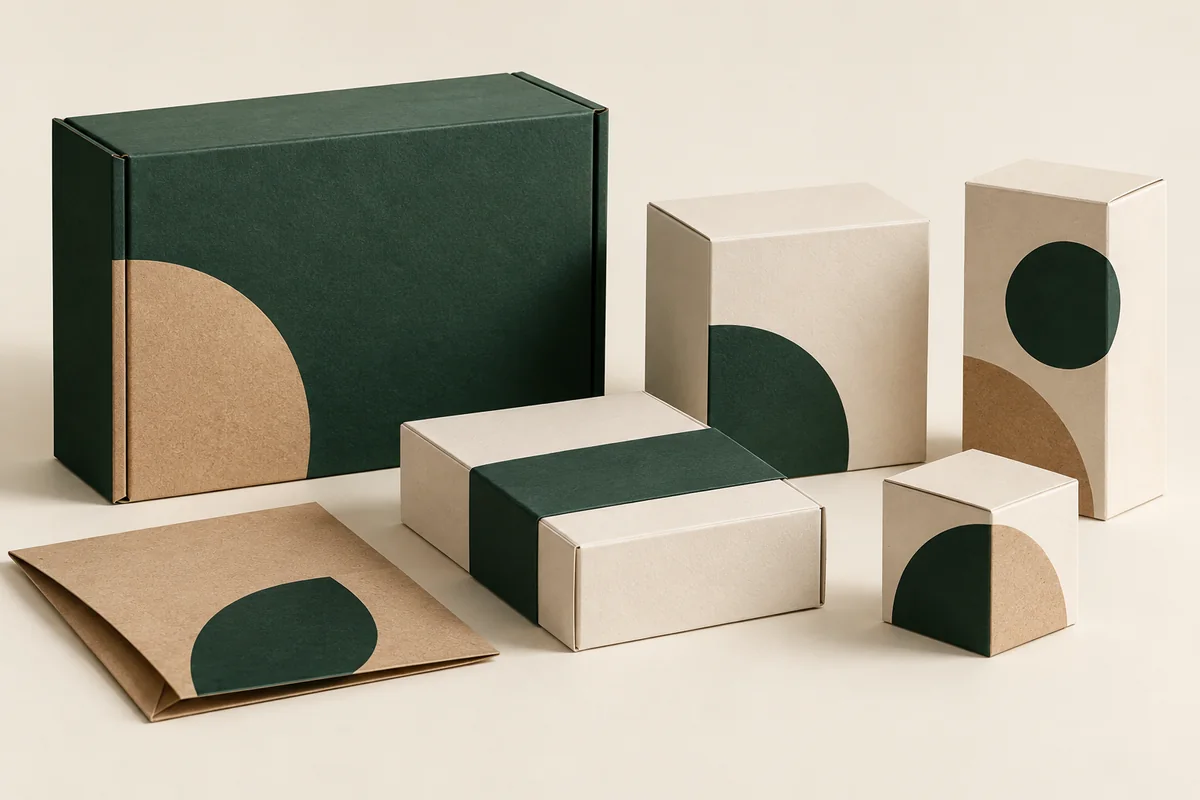
Custom packaging trends in 2026 offer useful ideas for improving fit, brand clarity and the opening experience. This guide translates selected design directions into practical choices a brand can test; it does not assume that every trend suits every product.
Prioritize appropriately sized structures, useful material choices, clear information and consistent branding. Treat the ideas below as planning directions to test, rather than promises that every market or product needs the same design.
What current industry signals suggest
DHL’s 2026 e-commerce insights report customer interest in packaging changes and clearer recycling information. These findings provide context for online retail; they do not establish that one material or box style is best for every brand. Your product, destination and fulfillment process remain the basis for the specification.
The following priorities are our interpretation of those signals alongside practical packaging considerations. Rather than chasing every trend at once, choose one or two improvements with a clear objective. Compare a prototype with your existing pack and record what changes for customers and packing staff.
1. Better fit and less unnecessary empty space
Right-sizing means matching the product and its protective system. It does not mean forcing an item into the smallest cavity. Include accessories, wrapping, insert and assembly clearance in the measurements. Review whether a small size family can serve your order mix more effectively than a single oversized box.
A brand selling several candle sizes might use related carton dimensions with the same visual identity, rather than placing every jar in one large carton. Test product restraint and shelf presentation together. Compare the external parcel dimensions as well: carrier dimensional-weight guidance shows why shipping volume can matter.
2. Materials chosen for function and clear information
A natural-looking surface can be attractive, but customers also need meaningful information. Describe the actual pack and give disposal guidance appropriate to its construction and destination. If recycled content or certified sourcing is important, request evidence before adding the claim to the artwork.
Consider whether coatings, windows and inserts can be simplified without losing their purpose. A paper insert may make sense for one product while another needs a different protective approach. Read our sustainable packaging guide for a structured review instead of relying on a material’s appearance.
3. Modular packaging families for changing ranges
A modular family uses consistent visual rules across several structures or sizes. Shared logo placement, colors and information zones can help a new product fit into the range. An insert or sleeve may vary while the overall presentation stays recognizable. This is a design strategy, not a guarantee that one structure will accommodate every product.
For a beauty range, a bottle carton and a gift set could share typography and panel hierarchy while using different proportions. Keep product-specific information easy to identify. Standardization should simplify artwork management without hiding important differences between variants.
| Direction | Useful goal | What to test |
|---|---|---|
| Right-sized structure | Reduce avoidable space | Fit, restraint and external parcel volume |
| Material simplification | Make components easier to understand | Protection, separation and collection guidance |
| Modular design family | Keep a growing range consistent | Variant recognition and artwork management |
| Connected information | Offer useful instructions beyond the box | Scan reliability and mobile destination |
| Focused unboxing | Make opening and removal intuitive | Opening sequence and unnecessary steps |
4. Connected packaging with a useful destination
A QR code can connect a customer to care instructions, setup guidance or a reorder page. Its value comes from the destination, not from the code itself. Keep the page mobile-friendly and durable, and make the purpose clear next to the code. Essential product information should not disappear behind a link where physical labeling is needed.
Test a printed sample using several phones and normal lighting. Position the code away from folds, reflective finishes and areas that may be covered by a shipping label. Avoid collecting customer data without an appropriate process. A simple care page can be more useful than an elaborate digital experience that is difficult to maintain.
5. A considered unboxing with fewer distractions
Good unboxing design gives the customer a clear opening point, a coherent reveal and an easy way to remove the product. More layers do not automatically create a better experience. Consider a small interior message, an organized insert or a restrained surface detail rather than adding several decorative components.
Use finishes where they support hierarchy. A foil accent on a logo or a subtle embossed mark may be enough. Compare physical samples so that texture, glare and legibility remain balanced. See our materials and finishes guide before specifying several processes.
How to run a small packaging improvement trial
- Choose one goal, such as easier packing or clearer product identification.
- Record the current specification and packing process.
- Build a prototype with the intended product and insert.
- Check assembly, opening, print readability and delivery needs.
- Compare observations and revise before a full order.
Do not attach unsupported sales or environmental percentages to a design change. Measure what you can verify, such as material weight or packing time, and state the conditions of the comparison. Keep broader claims separate unless they have appropriate evidence.
Turn a packaging trend into a testable design decision
Custom packaging trends in 2026 are useful as ideas to investigate, rather than requirements every brand must follow. The themes in this guide are editorial design directions, not a measured ranking of US consumer preferences. For your next revision, choose one problem: inconsistent logo placement, excess space, a confusing opening sequence or a product card that buyers overlook.
| Design direction | Change to test | Evidence to record |
|---|---|---|
| More deliberate sizing | Review the insert and unused space | Fit, packed dimensions and damage observations |
| Clearer brand hierarchy | Simplify the main printed panel | Whether the brand and product remain easy to identify |
| Useful connected content | Link a QR code to relevant instructions | Scan reliability on a physical printed sample |
| A consistent range | Apply a shared grid to two SKU sizes | Print alignment and variant recognition |
Set the acceptance criteria before ordering a production run. Try the pack with the actual product, check it under normal light and rehearse the packing steps. Record what changed and what stayed the same so feedback can be attributed to the design decision rather than a different product or fulfillment process.
For a US brand, compare the complete delivered packaging specification, not a competitor’s promotional promise. Explore boxes with your logo and material and finish options to apply an idea to your own brief. Update this guide when new examples and evidence justify a revision; changing the year alone does not create a new analysis.
Frequently asked questions
Does my packaging need a redesign every year?
No. Improve a stable design when the product, customer experience or operational needs justify it. Consistency can be more valuable than a frequent cosmetic change.
Is minimal packaging always better?
It is better only when the product remains protected and necessary information remains clear. Remove unnecessary complexity, not essential function.
Which trend should a small brand try first?
Start with a fit and information review. These can reveal practical improvements before investing in complex finishes or digital features.
Apply a useful idea to your next pack
Explore custom packaging solutions and request a quote with your product, current packaging and one clear improvement goal.