
THE PACKAGING JOURNAL
Holiday Gift Packaging: A Practical Planning Checklist
Plan holiday gift packaging with a clear checklist for box size, inserts, artwork, samples and shipping protection before ordering custom boxes.
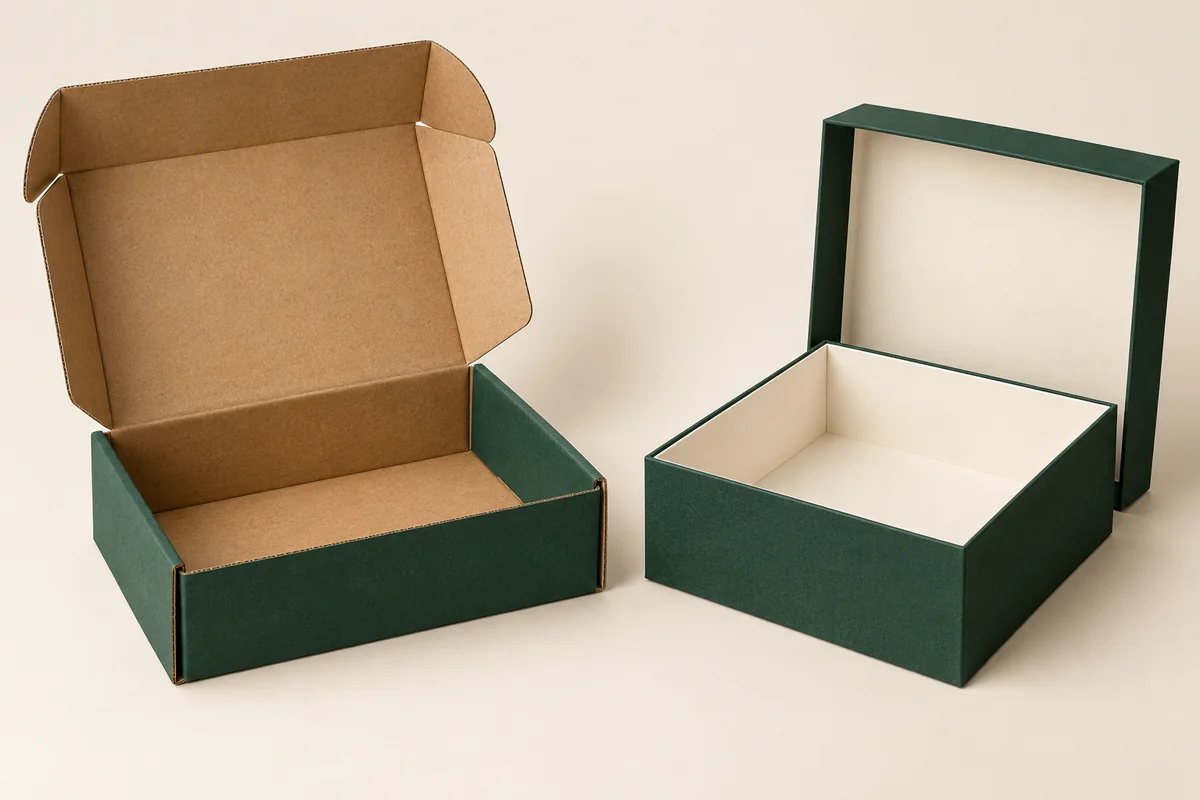
Holiday gift packaging needs to do more than look festive. It must hold the complete gift, support your packing routine and arrive ready for the recipient. Start with the products and delivery journey, then choose the box, insert and artwork. This checklist helps small brands prepare a clear brief without relying on an untested seasonal design.
1. Define the complete gift set
Write down every item, including accessories, cards and wrapping. Record the dimensions and filled weight of each product. For a mixed set, note which components are fragile, heavy or sensitive to rubbing. A candle jar beside a lightweight accessory needs a different layout from a folded garment with a gift card.
Choose a main gift configuration before ordering. If customers can select several combinations, check each one against the proposed layout. Keeping the outside box consistent can simplify packing, but the smallest assortment still needs restraint inside the pack.
2. Separate presentation from shipping protection
For a substantial opening experience, compare rigid presentation boxes with lid-and-base formats. For direct delivery, explore corrugated mailer boxes. Neither appearance nor the name of a structure proves that it will protect your particular gift in transit.
A decorative gift box may need a separate outer shipping carton. Leave room for the protection that the complete parcel needs. FedEx’s gift-shipping guide recommends a sturdy outer box with space for cushioning. Follow the requirements of the carrier and service you actually use.
3. Plan the insert and opening sequence
Arrange the items as the customer should see them, then decide how each piece will stay in place. Dividers can separate products; a fitted insert can locate individual components. Our custom box inserts guide explains what to check before choosing a construction.
Include finger access so the recipient can remove the gift comfortably. Avoid hiding an accessory under another product without a clear indication. Try the arrangement with the real items: attractive spacing in a digital mockup can become an awkward fit once wrapping and manufacturing tolerances are included.
4. Keep seasonal artwork easy to understand
Choose one clear message and give the brand name enough space. Check small text, folds and areas covered by a sleeve or label. Keep required product information visible. If the box serves several occasions, consider a seasonal card or sleeve instead of printing a date-specific message across every panel.
Review the artwork on the intended material. A deep color on brown kraft may look different from the same file printed on white board. Ask how the selected printing process and finish affect fine lines, contrast and readability; a screen preview cannot confirm the finished color.
5. Work backward from your required delivery date
Build a schedule that includes specification, sampling, artwork approval, production and delivery. Ask the supplier to confirm each stage for the actual order. Leave time to inspect incoming packaging and train anyone assembling it. Do not assume that a general production estimate includes freight or a revised proof.
Separate the date when you need empty boxes from the date when customer orders must ship. Seasonal carrier deadlines and capacity can change. Check current information with your supplier and carrier instead of treating an older holiday timetable as a promise.
6. Approve a packed sample before production
Assemble the sample, load the full set and close it using the proposed sealing method. Check movement, removal, surface contact and stacking. Review the complete parcel with your supplier for appropriate transit evaluation. A quick handling check is useful, but it does not replace testing for the distribution conditions.
Ready to prepare the brief? Request a packaging quote with product dimensions, quantity, preferred format, artwork and required delivery location. For the broader specification process, read how to choose the right custom box.