THE PACKAGING JOURNAL
What Is Ecommerce Packaging? Types, Materials & Best Practices
Choose packaging around the complete order: compare shipping formats, materials, fit and protection before adding print and branding.
An online order has to survive a journey before anyone sees what is inside. The box may be stacked, carried and opened far from the packing bench. Ecommerce packaging connects those practical demands with the moment a customer meets your product.
The useful question is not simply which box looks good. It is which combination of outer pack, internal protection and product carton suits the order. Start with the packed contents, then work outward. This guide explains the main formats, materials and decisions so you can prepare a clear packaging brief without buying unnecessary layers or overlooking protection.
What Is Ecommerce Packaging?
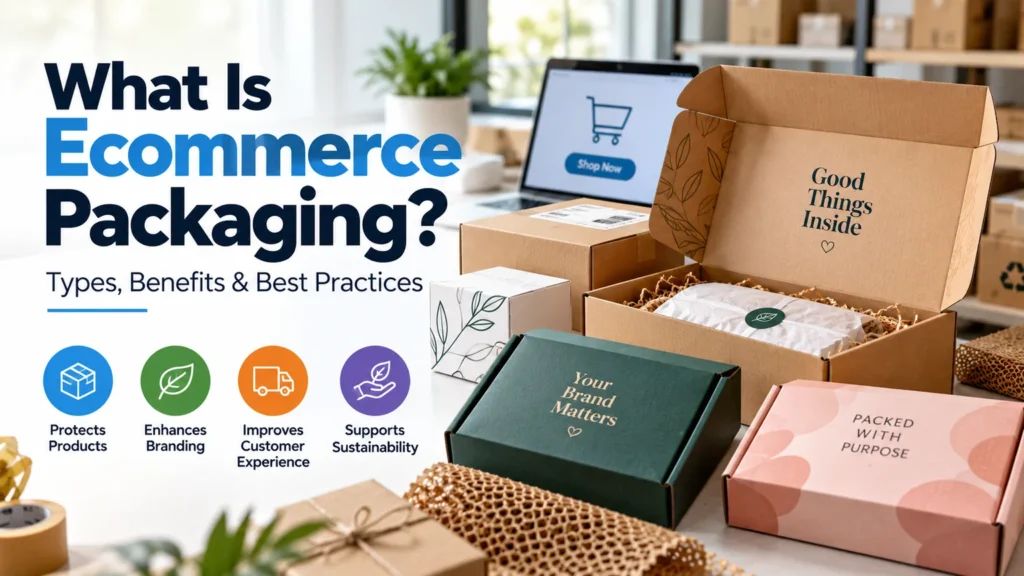
Ecommerce packaging is the complete packaging system used to prepare an online order for delivery to its customer. It can include an outer shipping box or mailer, protective inserts or cushioning, and the product’s own retail pack. Those layers work together; a printed carton alone is not necessarily ready for parcel shipping.
For example, a boxed candle may need a fitted insert and an outer corrugated shipper. A folded shirt has different needs. The product, order quantity and delivery conditions determine the system.
Ecommerce Packaging vs Retail Packaging
The difference is mainly one of priorities. Retail packaging helps present a product on a shelf; ecommerce packaging must also handle delivery to an individual buyer. A single pack can serve both roles when designed and assessed for them.
| Consideration | Ecommerce packaging | Retail packaging |
|---|---|---|
| Main job | Deliver an order and support unpacking. | Present, identify and contain a product. |
| Environment | Parcel handling and doorstep delivery. | Shelf display and customer handling. |
| Protection | Account for the complete shipping journey. | May rely on an outer transport carton. |
| Branding | Visible outside, inside or during opening. | Often focused on visible display panels. |
| Typical formats | Shippers, corrugated mailers and inserts. | Product cartons and presentation boxes. |
Use this guide for planning; explore retail and ecommerce packaging when comparing project options.
Why Ecommerce Packaging Matters
Protection starts with limiting unwanted movement and supporting vulnerable areas. A box that fits closely but presses against a fragile part can still be wrong. Consider the contents and cushioning together.
Package size also affects shipping efficiency. UPS explains dimensional weight as a consideration when a package is large relative to its weight. Compare the closed outer dimensions and packed weight using your carrier’s current service rules, rather than assuming the smallest-looking box will cost least.
At the bench, straightforward assembly and a clear packing sequence help make orders consistent. For the customer, readable opening instructions and accessible contents matter alongside print. Plan how the package will be opened and, where relevant, reused for a return.
Common Types of Ecommerce Packaging
Corrugated shipping boxes
Shipping cartons provide an outer enclosure for single products or several items. They need suitable board, closure and internal protection. Compare ecommerce shipping boxes against the fully packed order, not just the bare product.
Mailer boxes
Folded mailer boxes can combine presentation with an opening experience suited to DTC orders. A tuck closure still needs review for transit security; an attractive shape does not establish shipping suitability.
Product cartons and internal protection
Folding cartons can identify and organize individual products inside a shipment. Fitted inserts separate items or hold them in position; cushioning absorbs or distributes handling forces. Tissue can improve presentation, but should not be treated as sufficient protection for a fragile item.
Flexible or padded mailers are other market options for suitable contents. They offer less rigid support than a box, so assess puncture, bending and crush risks before choosing them.
Ecommerce Packaging Materials
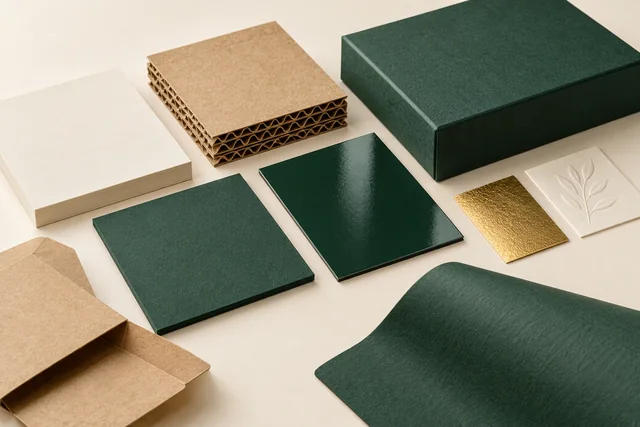
Corrugated board uses fluted paper between liners. Different constructions offer different thickness, stiffness and cushioning characteristics. Specify corrugated boxes around the product’s weight, fragility and handling needs; flute size alone does not determine the strength of the finished pack.
Kraft describes a paper material or appearance, not a guarantee of shipping performance. Paperboard, including solid bleached sulfate (SBS), can suit printed product cartons, while corrugated structures often provide the outer shipping layer.
For inserts, consider support, surface contact and removal. A delicate finish may need protection from rubbing as well as movement. Review the proposed materials and finishes together, because coatings, adhesives and mixed components affect the finished package.
How to Choose the Right Ecommerce Packaging Solution
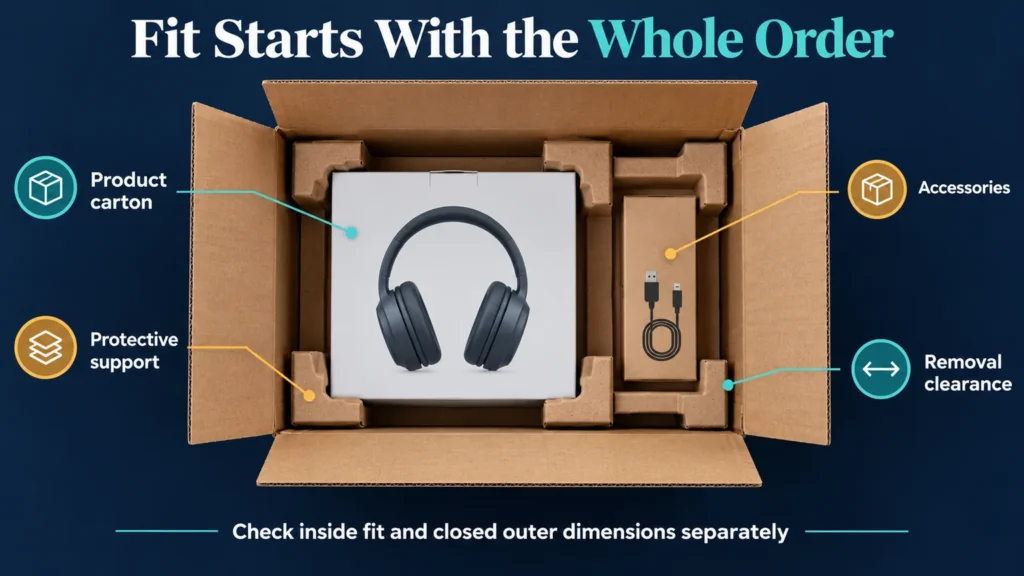
- Measure the complete order. Include product cartons, accessories, wrapping and inserts. Specify required inside dimensions separately from the closed outer shipping dimensions.
- Map the risks. Record packed weight, fragile areas, sharp edges and surfaces that must stay unmarked. Note whether several items can collide.
- Select a structure. Choose a shipper or mailer based on support, closure and the packing sequence. Check common order combinations rather than designing around one convenient example.
- Control empty space. Add deliberate clearance for protection and removal. Do not fill an oversized box simply because it is already available.
- Plan closing and reopening. Confirm tape, seals or other closure details. If returns are expected, check whether the customer can reclose the pack securely.
- Add branding where it helps. Place essential information where labels and tape will not hide it. Custom e-commerce packaging can use restrained print without adding several decorative layers.
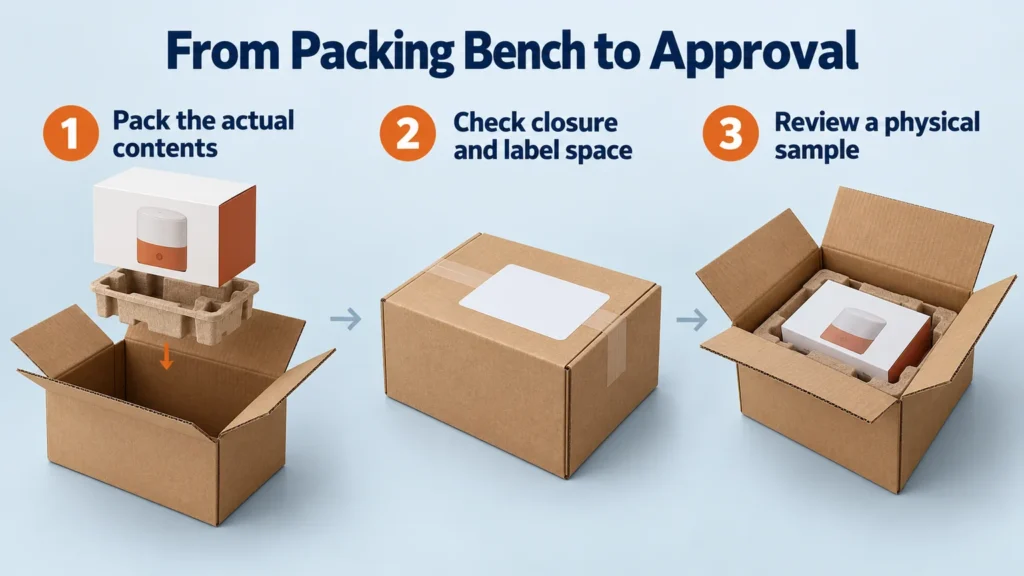
- Check a physical sample. Pack the actual contents, close the box and review fit, assembly and removal. Assess the complete pack under representative shipping conditions before scaling.
A useful test order is your awkward combination: perhaps two different carton heights rather than two identical products. It can reveal gaps that a tidy single-item sample misses.
Sustainable Ecommerce Packaging
Begin with material that has a clear job. Right-sizing, reducing redundant layers and selecting protection appropriate to the product are practical starting points. Removing necessary cushioning can lead to damage, so assess changes as a complete system.
Sustainable ecommerce packaging also needs specific, supportable claims. The FTC’s Green Guides summary cautions against broad environmental claims and explains qualifications for recyclable claims. Check the finished construction and intended disposal stream. Brown paper, a recycled-looking texture or a paper-based outer layer does not establish that every component is recyclable everywhere.
Common Ecommerce Packaging Mistakes
Oversized boxes create avoidable empty space; undersized ones can squeeze the contents or leave no room for protection. Both mistakes often start with measuring the product before its accessories and inserts are included.
Another mistake is approving artwork before the structure. Check fit first, then confirm print on the final dieline. Keep assembly manageable, avoid decorative pieces that obstruct packing, and verify environmental wording before it reaches the artwork.
A Simple Ecommerce Packaging Checklist
- Product and common order combinations measured with all components.
- Packed weight, fragile points and required protection recorded.
- Inside dimensions, outer dimensions and closure clearly distinguished.
- Assembly, opening, labels and any return use checked.
- Quantity, artwork, destination and sample requirements ready.
Frequently Asked Questions
What is ecommerce packaging?
It is the packaging system that prepares an online order for delivery, including the shipping enclosure, internal protection and any product pack.
What type of packaging is best for ecommerce?
The right format depends on weight, fragility and handling. Choose by the complete packed order, then confirm the fit and protection with a physical sample.
How does ecommerce packaging differ from retail packaging?
Ecommerce packaging prioritizes individual order delivery; retail packaging prioritizes presentation and identification. Retail packs may still need a separate shipping enclosure.
Which materials are commonly used?
Common choices include corrugated board for shipping structures, paperboard for product cartons, and paper-based or other protective materials selected for the contents.
Can packaging reduce shipping waste or cost?
Appropriate sizing can reduce unused space and unnecessary filler. Actual shipping cost depends on packed dimensions, weight, destination and the carrier’s applicable pricing.
When does custom ecommerce packaging make sense?
Consider it when stock sizes leave poor fit, packing is awkward, or consistent presentation matters. Compare the complete packing process before committing to a structure.
Plan the Pack Around the Order
Effective ecommerce packaging begins with the contents and the delivery journey. Set the fit, protection and closure first, then add print that supports your brand. A sample packed with the real products is more useful than judging an empty box from a photograph.
When you are ready to compare custom packaging for ecommerce, request a packaging quote with your complete packed dimensions, quantity, artwork and destination. Include fragile areas and typical order combinations so the discussion starts with how the package needs to work.
KEEP EXPLORING