THE PACKAGING JOURNAL
What Is Cardboard Made Of? Materials, Layers, and How It’s Made
Cardboard starts with paper fibers, often from wood pulp and recovered paper. Learn how those fibers become solid board, corrugated layers and finished packaging.
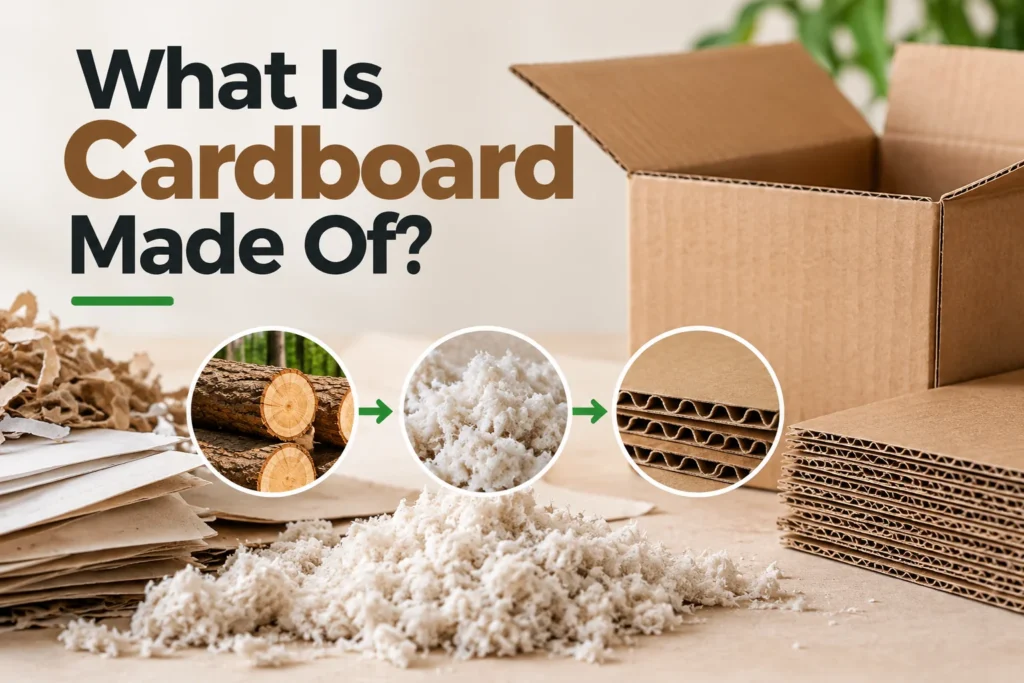
Cardboard is mainly made of cellulose fibers, usually obtained from wood pulp, recovered paper, or a blend of both. The fibers are processed into paper or board. For corrugated cardboard, flat sheets are then joined to a wavy paper layer, commonly with a starch-based adhesive.
That is the short answer. The useful distinction is between the material and its construction. A cereal carton and a shipping box can both be called cardboard, but cut through their edges and you will see different structures. Understanding that difference makes it easier to choose packaging, compare a material specification and ask the right questions before ordering.
What Is Cardboard?
“Cardboard” is an everyday name for several stiff, paper-based materials. It is useful in conversation, but it does not identify one exact packaging grade.
A thin retail carton may use solid paperboard. A shipping carton usually uses corrugated board, which has a rippled middle layer. A rigid presentation box may have a thick board core covered with a separate printed wrap. These materials can look similar once printed, even though they fold, feel and perform differently.
Look at an exposed edge rather than judging the printed surface alone. If you are requesting packaging, describe the construction or send a sample alongside the word cardboard. A photograph of a closed box may hide the detail that matters most.
What Is Cardboard Made Of?
The main ingredient is a network of cellulose fibers. Manufacturers can use fresh, or virgin, fibers from wood pulp; fibers recovered from used paper and board; or a mixture chosen for the required material.
Fresh fiber and recycled paper are not unrelated ingredients. Recovered paper contains fibers that have already been made into a paper product. Recycling makes those fibers available for another use after collection and processing.
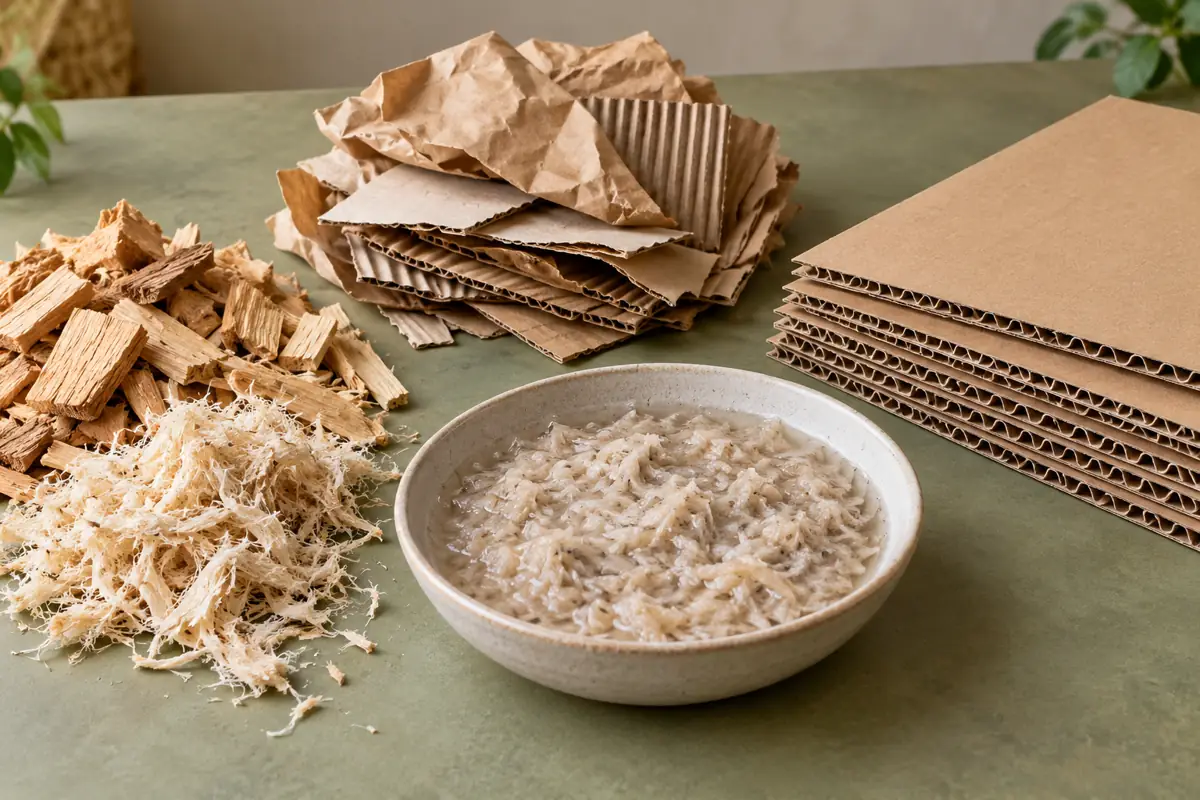
The finished pack can contain more than fibers. Corrugated board needs adhesive to bond its layers. Printing adds ink, while selected grades or applications may use coatings, surface treatments or other components. The precise recipe depends on what is being made. FEFCO’s material overview explains the relationship between paper fibers, fluting, liners and starch adhesive.
Ask about the complete construction if a coating, window or lining matters to your application. “Made from paper” does not describe every component of a finished box.
Is Cardboard Made of Paper or Wood?
Both descriptions can be correct, but they refer to different stages. Wood can supply the original fibers. Paper and board are the materials made after those fibers have been separated, processed and formed into sheets.
A cardboard box is not a thin wooden box. It does not retain the solid structure of a plank. Its fibers have been rearranged into a paper-based material, which can then be cut, creased, layered or glued into packaging.
So, is cardboard made of paper? Corrugated board is assembled from papers made for its liners and middle layer. Solid paperboard is also fiber-based, although it does not have that corrugated sandwich. The exact term becomes more useful once you know whether you need a folding retail carton, a mailer or a shipping box.
How Is Cardboard Made?
There are two connected jobs: making the paper or board from fibers, and converting it into the required packaging structure. A box plant may receive ready-made paper reels or board sheets rather than producing its own pulp.
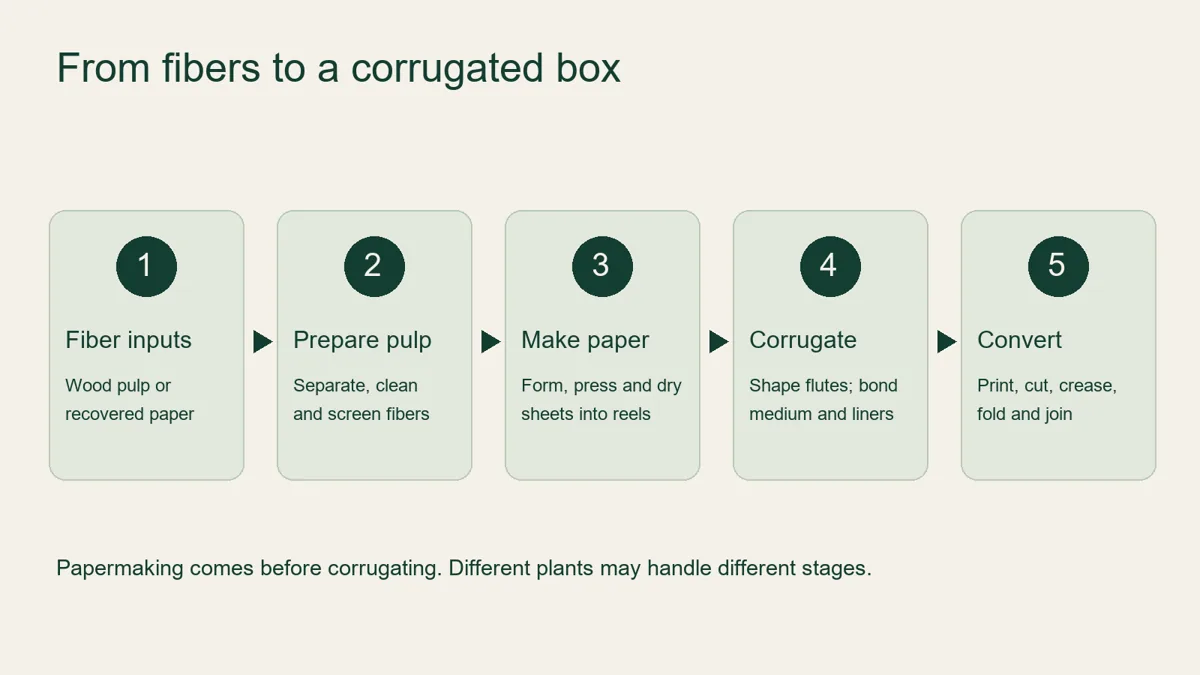
1. Collecting Raw Materials
The supply can include wood chips and other suitable wood material for fresh pulp, together with recovered paper and cardboard for recycled pulp. The selected inputs depend on the grade being produced. The American Forest & Paper Association describes these two main feedstocks and the stages that turn them into paper products.
Collected paper must be suitable for processing. A recycling stream is not simply every paper-looking item tipped into one machine without sorting or preparation.
2. Pulping and Processing Fibers
Pulping separates the fibers so they can be formed into a new sheet. Wood can be processed using mechanical or chemical methods, depending on the intended product. Recovered paper is mixed with water in a repulper to release fibers from its previous sheet structure.
Cleaning and screening help remove unwanted material. Further treatment depends on the input and the paper grade. A bright printing surface and a brown liner do not necessarily need the same processing. The important point is that pulp is a fiber suspension, not a finished cardboard sheet.
3. Forming the Paperboard or Corrugated Layers
For papermaking, the diluted fibers are spread onto a moving forming surface and water drains away. The developing sheet is pressed and dried before it is wound into reels or prepared for its next stage.
Corrugated production uses finished paper reels. A corrugator shapes the medium into waves and bonds it to flat liners. FEFCO’s production guide describes this combining process. It is a separate operation from forming a wet paper sheet out of pulp.
4. Drying, Pressing, and Finishing
Drying is needed during papermaking; heat also helps the adhesive bond during corrugated-board production. The aim is a usable sheet with an intact structure, not a flattened version of the flutes.
The board is then converted for the job. Printing, cutting, creasing, folding and joining create the box panels and closures. These operations vary with the format. PCA’s manufacturing explanation shows how combining board and converting boxes fit into different plant workflows.
Many boxes reach the packing team flat. Their final shape appears when the cut and creased structure is assembled.
What Are the Layers of Cardboard?
In ordinary single-wall corrugated board, there are three paper layers:
- Outer liner: the flat face on the outside of the box.
- Fluted medium: the wavy paper between the liners.
- Inner liner: the flat face toward the contents.
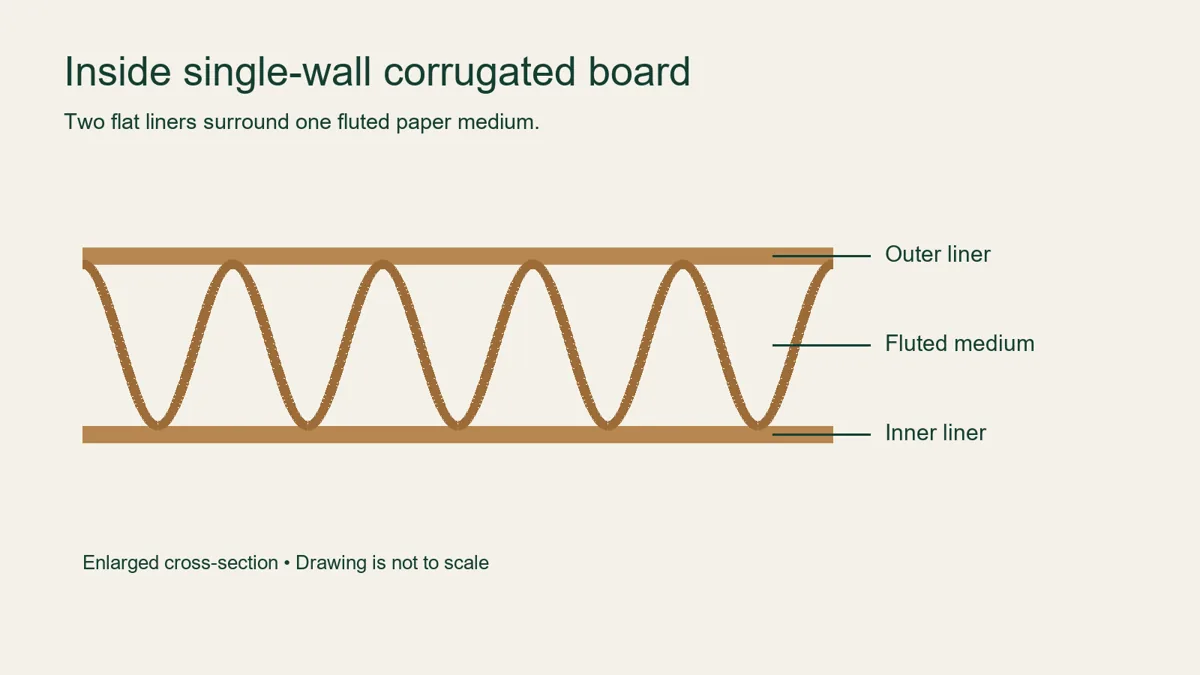
The waves hold the faces apart and contribute to the board’s stiffness. Their shape, the paper grades and the finished box design all affect performance. Double-wall constructions add another fluted layer and liner; they are not just one thicker sheet of ordinary paper.
This is why “cardboard thickness” is an incomplete specification for corrugated boxes. Two boards that look similarly thick can behave differently. Share the packed weight, insert arrangement and handling conditions so the whole pack can be assessed.
Why Is Cardboard Usually Brown?
Much packaging uses brown, unbleached paper grades. Their color reflects the fiber source and processing, including colored compounds associated with the pulp. Bleaching changes pulp brightness; recycled inputs and surface treatments can also affect the finished shade.
Brown does not mean the material is still raw wood. Nor does every brown box have the same fiber mix. One may use different papers for its visible face and inner layers.
White cardboard is possible too. A white face can come from a selected liner, coating or wrap rather than the entire material being white through its thickness. For a printed pack, examine the edge and both surfaces of a sample. That is more informative than assuming a color tells you its composition, strength or recycling route.
Where Does Cardboard Come From?
Its fiber supply starts with plant material, commonly wood, and with paper products collected for recycling. The route from those inputs to your box can involve a pulp mill, a paper or board mill, a corrugating operation and a packaging converter.
Those stages do not all have to take place at one factory. A converter can receive purchased sheets and turn them into printed, cut packaging. A supplier’s business address therefore does not, on its own, tell you where the fibers originated.
If origin or recycled content is part of your purchasing requirements, request documentation for the specified material. Appearance alone cannot confirm either one.
Why Cardboard Is Popular for Packaging
Paper-based board can be cut, folded and printed into many useful formats. A small retail carton gives a product an organized printed surface. A corrugated mailer provides a different opening and packing structure. An outer shipping carton serves another handling role again.
For custom shipping boxes, assess the packed product, protective materials, closure and journey together. The word cardboard does not guarantee transit protection. A glass jar and a folded shirt may need different support even if their boxes share the same outside dimensions.
Storage and assembly matter as well. Check how the proposed structure arrives, how much work it takes to pack, and whether staff can repeat that process consistently. A box that looks right but is awkward to load can create problems at the packing table.
When comparing custom packaging boxes, start with the job the material must do, then discuss the board, print and finish. Do not choose a grade from a photograph alone.
Cardboard vs. Paperboard: What’s the Difference?
Cardboard is the broad everyday term. Paperboard is a more specific paper-based material term, often used when discussing folding cartons and other relatively solid board structures. It can contain several plies, even when the edge looks solid.
Corrugated board has a visibly different construction: a fluted medium bonded to liners. The liners and medium themselves are paper-based materials. The distinction is therefore about construction as well as terminology.
| What you see | More useful description | What to check |
|---|---|---|
| Smooth, folding retail carton | Paperboard carton | Grade, surface, creasing and product fit |
| Wavy layer between flat faces | Corrugated board | Paper grades, flute profile and complete pack |
| Thick presentation walls with a wrap | Rigid box construction | Core board, wrap, lid fit and insert |
Coated and uncoated grades are also different choices. The Recycled Paperboard Alliance’s conversion guide distinguishes coated and uncoated recycled paperboard. If you are exploring cardstock and paperboard options, compare samples with the artwork and folding requirements in mind.
Quick Facts About Cardboard
- Cardboard is a broad name, not one fixed material recipe.
- The main structure comes from paper fibers; grades can use fresh fibers, recycled fibers or both.
- Single-wall corrugated board has two liners around one fluted medium.
- Brown and white surfaces do not reveal the full composition of a box.
- A finished pack may also include adhesive, ink, coatings, windows or separate inserts.
- Specify the construction and application before relying on a label such as “thick cardboard.”
Frequently Asked Questions
What is cardboard made of?
Cardboard is mainly made from cellulose fibers, commonly supplied by wood pulp and recovered paper. The finished material may also contain adhesive, coatings or printing, depending on its grade and use.
Is cardboard made of paper or wood?
Wood can provide the original fibers, but those fibers are processed into paper-based materials. A cardboard box is not solid wood. Recovered paper can supply fibers for a new sheet too.
How is cardboard made?
Fibers are pulped, cleaned and formed into paper or board. For corrugated packaging, paper reels are combined into liners and a fluted medium. Cutting, creasing, printing and joining then produce the required box structure.
What are the layers of cardboard?
Single-wall corrugated cardboard has an outer liner, one fluted middle layer and an inner liner. Solid paperboard has a different structure and does not have that wavy center.
Why is cardboard brown?
Many packaging grades use brown, unbleached papers. Fiber sources and processing influence the shade. Color alone does not establish recycled content, strength or whether the finished box suits a particular recycling stream.
Is cardboard the same as paperboard?
Not exactly. Cardboard is an informal umbrella term. Paperboard describes a paper-based material used in structures such as folding cartons, while corrugated board combines fluting and liners into a different construction.
KEEP EXPLORING