
THE PACKAGING JOURNAL
Sustainable Packaging: Materials & Practical Trade-Offs
Explore sustainable packaging decisions: right-sizing, material evidence, recycling limitations and practical checks for a complete protective pack.
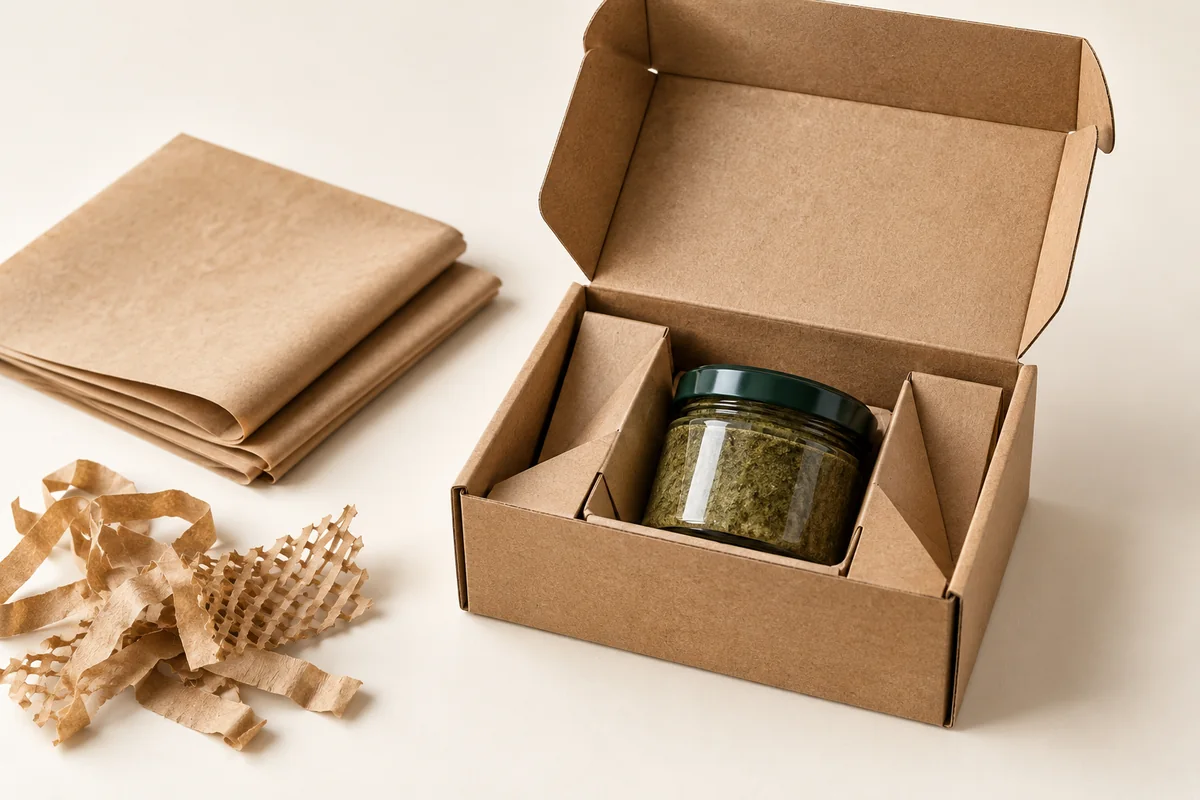
A practical sustainable packaging guide starts with the complete product journey. Compare materials, right-sizing and protective components using evidence, then make specific claims about the actual package rather than relying on broad environmental labels.
Reduce avoidable space and components without compromising protection. Compare the complete pack, document material claims and check the collection systems available to your customers. Use precise descriptions instead of broad promises such as “100% eco-friendly.”
Define what you want to improve
Set a practical objective before selecting a new material. You might want less empty space, fewer packing components, a clearer recycling route or less material per shipment. Record the current system so that changes have a meaningful comparison: box size, weight, insert, wrapping, packing time and observed product damage.
Keep the scope clear. A claim about recycled content describes material composition; it does not establish the total environmental impact of manufacturing and transport. A paper insert may replace a mixed-material component, but its performance and local disposal route still need review. Consider each change within the complete packaging system.
Right-size the box without losing protection
Measure the product in its packed state and include necessary cushioning, accessories and clearance. Review whether one oversized box is being used for many different products. A small family of sizes may reduce empty space, although it can also add stock complexity. Compare both outcomes using the actual order mix.
External parcel dimensions can affect shipping charges as well as storage. FedEx describes how dimensional weight considers package volume. This supports reviewing the external pack, but it is not a universal emissions calculation. Do not turn a reduction in box size into an unsupported carbon claim.
Compare materials with evidence
Ask for the exact composition of the board, coatings, adhesive and inserts. If recycled content matters to your project, request documentation that identifies the relevant material and proportion. If certified sourcing is required, confirm the supplier’s certification and the eligibility of the proposed product and label.
FSC’s packaging information provides context for responsible forest sourcing and certification. Certification claims must relate to eligible products and an appropriate supply chain. This guide does not claim that Custom Boxes Nation’s products are certified; certification requirements should be discussed and verified for each project.
| Question | Evidence to request | What it does not prove |
|---|---|---|
| Does it contain recycled material? | Composition and percentage for the specified component | That every part of the finished pack is recycled |
| Is sourcing certified? | Relevant certificate and product claim documentation | That any logo may be printed without approval |
| Can customers recycle it? | Construction details and local collection guidance | Universal acceptance in every region |
| Does it use less material? | Measured comparison with a stated previous pack | A verified reduction in total carbon impact |
Simplify components and make separation clear
Review every component and ask what function it serves. An insert may be essential for restraint; a second decorative wrap may add little beyond the first. Remove components only when the product remains appropriately protected and the packing routine remains practical. Consolidating information on an existing panel may reduce the need for a separate card.
A pack with separable components can be easier to explain than a permanently bonded combination. Where mixed materials are necessary, consider whether customers can remove the insert or film without specialist tools. Disposal instructions should describe the actual components and destination conditions, rather than displaying a recycling symbol without context.
Use careful, specific environmental language
Broad labels such as green, sustainable or biodegradable can be interpreted in several ways. Replace them with a clear description of what is known. For example, state a verified material percentage for the relevant part or explain a measured reduction against a named previous design. Keep supporting records available.
The FTC’s Green Guides summary is a useful United States reference on qualifying environmental claims. Requirements vary by market, so seek appropriate review for your destination and wording. Avoid confusing recyclable, recycled, compostable and biodegradable: these describe different attributes.
Test the revised package before scaling
Evaluate fit, packing, opening and shipment performance with the real product. Compare damage and return observations where available. A reduction in protective material that increases replacement shipments may undermine the objective. Similarly, a reusable box only delivers the intended experience if the customer has a practical reason to keep and use it.
Document the approved specification so later reorders remain comparable. If the board or finish changes, revisit the claims and disposal instructions. A sourcing decision should not be treated as permanently verified after one sample or one purchase.
A practical sustainability review checklist
- Record the current pack and a clear improvement objective.
- Measure the product and identify unnecessary empty space.
- Review each component’s purpose and separation.
- Request evidence for material and sourcing claims.
- Check customer-region disposal guidance.
- Test product protection and record the final specification.
A practical sustainable packaging review for US brands
A sustainable packaging guide should help you identify a measurable change. Start with the complete pack: outer box, insert, protective wrap, tape and printed finish. Record the current components and compare a proposed alternative while keeping the same protection requirement. Removing material that leads to more product damage is not automatically an improvement.
| Proposed change | Evidence to request | Check in use |
|---|---|---|
| A smaller outer box | Old and new dimensions and material weights | Closure, product restraint and transit protection |
| Recycled-content board | Documented content for the supplied stock | Print performance and structural fit |
| A simpler insert | Material and assembly details | Movement of every item in the pack |
| A different coating | Complete coating and disposal information | Required protection and local acceptance |
Keep environmental statements specific to the documented package. The FTC’s Green Guides summary addresses the need to substantiate environmental claims and qualify recyclability statements where access is limited. Recycling acceptance depends on the complete material combination and local facilities; brown paper appearance alone is not evidence.
Ask what documentation applies to your actual order, then compare sustainable custom packaging options and custom kraft boxes. Review the sample, disposal information and practical protection together before making claims on the printed package.
Frequently asked questions
Are kraft boxes automatically sustainable?
No. Their appearance alone does not establish sourcing, recycled content or overall environmental impact. Review the exact specification.
Does paper-based mean recyclable everywhere?
No. The finished construction and local collection systems matter. Coatings and mixed components may change the appropriate route.
Should I remove all inserts?
Only if the product remains properly protected. An appropriately designed insert can prevent damage and organize the opening experience.
Review your packaging system
Explore material-conscious packaging options and material details. Share your current pack and improvement goals for a project-specific discussion.